

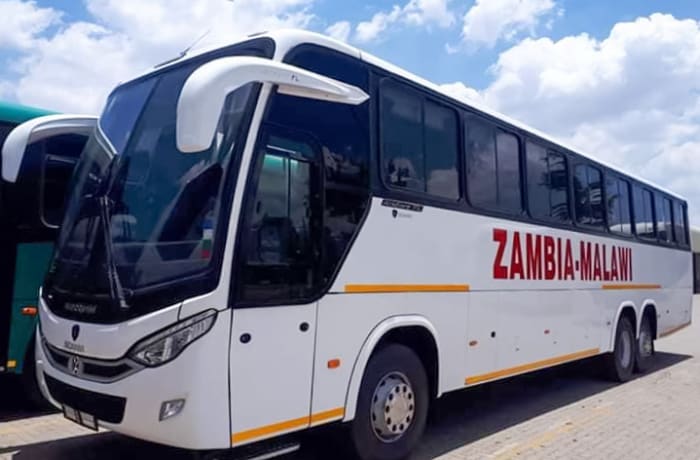
The Lilongwe to Lusaka bus is one of southern Africa’s most important cross-border routes, connecting the capital of Malawi to the capital of Zambia across a journey that takes you through some of the most quietly beautiful parts of the continent. This is not a route with a dozen operators and five daily departures. It is simpler than that — and in some ways, more interesting. There is essentially one company running the direct bus, one border crossing to navigate, and one departure time that most travellers know before they even buy their ticket.
What this route lacks in choice it makes up for in straightforwardness. One bus, one crossing, one long day on the road. This guide tells you everything you need to plan and complete the Lilongwe to Lusaka bus journey in 2026: the operator, the fare, where to buy your ticket, what to expect at the Mchinji–Mwami border, the documents you must carry, and the practical tips that every experienced traveller on this corridor has learned the hard way.
How Far is Lilongwe from Lusaka by Road?
The road distance from Lilongwe to Lusaka is approximately 700 to 720 kilometres by the most direct route. The journey goes west from Lilongwe through the Malawian countryside to the Mchinji–Mwami border crossing, then west through Chipata, Petauke, and Nyimba before arriving in Lusaka from the east.
The journey takes between 10 and 14 hours depending on how long the border crossing takes, road conditions, and stops along the way. On a smooth day with a fast border, you can be in Lusaka by early evening if you depart Lilongwe at 4:00 AM. Factor in a slower border and a couple of road stops and you are looking at more like 12 to 14 hours total.
The Road Route: Lilongwe to Lusaka Explained
The standard route for the direct Lilongwe to Lusaka bus is:
Lilongwe → Mchinji (Malawi border) → Mwami (Zambia border) → Chipata → Petauke → Nyimba → Lusaka
Here is what each section looks like on the ground:
Lilongwe to Mchinji is the first stretch through Malawi — about 110 kilometres heading west from the capital toward the Zambian border. The road passes through flat agricultural land and small market towns. It is a smooth, easy section of the journey that goes quickly.
Mchinji–Mwami border crossing is where the trip slows down. This is the main land crossing between Malawi and Zambia. The Mchinji–Mwami One Stop Border Post (OSBP) was opened to streamline processing — you clear both Malawian exit immigration and Zambian entry immigration in a single combined facility rather than stopping twice. More on the border crossing in detail below.
Chipata is the first major Zambian town after the border. If you are on the series-of-minibuses option rather than the direct bus, Chipata is where you change vehicles for the onward journey to Lusaka. On the direct Kobs bus, you pass through Chipata and continue west.
Chipata to Lusaka is the longest and most open stretch — about 590 kilometres of road through eastern and central Zambia. The road quality on the Great East Road has improved in recent years and is generally good tarmac. The landscape is flat savannah — wide open skies, small villages, roadside charcoal sellers, and the occasional baobab tree that makes you think you should stop and take a photograph but you are on a moving bus so you do not.
The Operator: Kobs Transporters (Zambia–Malawi Bus Line)
There is one company running the direct Lilongwe to Lusaka bus — Kobs Transporters, officially operating as the Zambia–Malawi Bus Line and sometimes referred to as KOBS Coach Services. Kobs has been running this route for years and is the only company with a dedicated daily direct service between the two capitals.
Every traveller account from this corridor — from backpacker blogs to local travellers — points to the same company. If you want to go direct from Lilongwe to Lusaka without transferring at Chipata, Kobs is your only option.
The bus is a standard long-distance coach — not luxurious but functional. Travellers report it as comfortable enough for the journey. It travels straight through without unnecessary stops, which most passengers appreciate on a 10 to 14 hour trip.
Kobs departs from Devil Street in Lilongwe. Devil Street is not its official name — no map will show it as that — but every single person in Lilongwe knows exactly what you mean when you say Devil Street. It is a stretch of road in the city centre near the main bus terminal where long-distance and cross-border operators cluster. The Kobs office is at the end of Devil Street, which is also the departure point for the bus.
Devil Street is the one part of Lilongwe where you need to watch your pockets. This is consistently flagged by travellers. Pickpocketing does happen in this area. Keep your valuables secured before you arrive and be aware of your surroundings while you are there.
Lilongwe to Lusaka Bus Fare 2026
The fare on the Kobs direct bus from Lilongwe to Lusaka is approximately 70,000 Malawian Kwacha per person one way, which translates to roughly $35–$40 USD at current exchange rates. Prices are the same in both directions.
Some travellers note that paying in Zambian Kwacha (ZMW) rather than Malawian Kwacha works out cheaper due to exchange rate differences — ask at the ticket office about which currency gives you the better deal on the day you buy.
| Route | Operator | Fare (MWK approx.) | Fare (USD approx.) | Journey Time |
|---|---|---|---|---|
| Lilongwe to Lusaka (direct) | Kobs Transporters | MWK 70,000 | $35 – $40 | 10 – 14 hours |
| Lusaka to Lilongwe (direct) | Kobs Transporters | ZMW 320 approx. | $15 – $18 | 10 – 14 hours |
Note: The significant price difference between the two directions reflects the exchange rate dynamics between the Malawian Kwacha and the Zambian Kwacha. If you are doing a return trip, the Lusaka to Lilongwe fare quoted in ZMW works out significantly cheaper than the Lilongwe to Lusaka fare quoted in MWK. Confirm current prices at the ticket office before purchasing.
The Alternative: Series of Minibuses
If Kobs is full or if you want a cheaper option, it is possible to do this route as a series of shorter legs:
- Minibus from Lilongwe bus station to the Mchinji border — approximately MWK 2,300 ($3.70)
- Cross the border on foot or by shared transport
- Shared taxi from the Zambian side to Chipata — approximately ZMW 15 ($1.50)
- Bus from Chipata to Lusaka — approximately ZMW 150 ($15), available until 11:00 or 12:00 noon
This option is significantly cheaper than the direct bus and is used regularly by local travellers. The trade-off is complexity — you are managing multiple legs, multiple transport providers, and you need to time the Chipata-to-Lusaka bus correctly or you will be stuck in Chipata for the night.
The direct Kobs bus is the right choice if you want simplicity, one vehicle, and a predictable arrival time in Lusaka. The minibus series makes sense if you are on a very tight budget and are comfortable navigating the stages independently.
Lilongwe to Lusaka Bus Schedule 2026
Kobs departs from Devil Street in Lilongwe at approximately 4:00 AM.
This is early — genuinely pre-dawn early. But there is logic behind it. A 4:00 AM departure from Lilongwe gets you to the Mchinji border in the mid-morning before the peak crossing queue builds, and gives you enough road time to reach Lusaka in the early to mid-evening. An 8:00 AM departure would have you arriving in Lusaka close to midnight.
The bus does not run on Thursdays. This is consistently flagged across multiple traveller accounts spanning years — Kobs skips Thursday departures from Lilongwe. If your intended travel day falls on a Thursday, you either need to book a different day or take the series-of-minibuses option.
| Departure | Day | From | To | Approximate Arrival |
|---|---|---|---|---|
| 4:00 AM | Daily except Thursday | Devil Street, Lilongwe | Inter-City Bus Terminus, Lusaka | 4:00 PM – 8:00 PM |
From the Lusaka side: The Kobs bus from Lusaka to Lilongwe departs from Lusaka’s Inter-City Bus Terminus (also called the main bus station) at approximately 5:00–6:00 AM, with some travellers reporting a 10:00 AM departure also available. Buy your ticket the evening before from the Kobs office at the Lusaka bus station.w to Buy Your Kobs Bus Ticket
There is no online booking for the Kobs Lilongwe to Lusaka bus. All tickets are purchased in person, cash only. This is the most important logistical point for anyone planning this journey from abroad — you cannot sort your ticket before you arrive in Lilongwe.
Step by step:
- Arrive in Lilongwe at least one day before your intended travel date
- Take a taxi to Devil Street — tell the driver “Devil Street” and they will know exactly where to go
- Walk to the end of Devil Street where you will find the Kobs office
- Purchase your ticket — bring MWK cash. The fare is approximately MWK 70,000 per person
- Confirm the departure time (typically 4:00 AM) and the boarding point (the same end of Devil Street as the office)
- Be at the bus by 3:30 AM on your travel day — early arrival means better seat selection
- Have your passport and documents ready before you board
Buy your ticket the day before you travel. The bus does fill up, particularly around weekends, public holidays, and end-of-month periods when traders are moving between the two capitals. Walking up on the morning of travel hoping for a seat is a risk not worth taking.
Your hotel can sometimes help. Several traveller accounts mention that their guesthouse or hotel in Lilongwe was able to call Kobs on their behalf to reserve a seat, allowing them to pay when they arrived at the office. If you are staying somewhere with helpful staff, it is worth asking them to make this call for you.
Documents You Must Carry
This is a cross-border journey between two countries. Missing or incorrect documents will get you turned back at the border. Here is exactly what you need.
1. Valid International Passport
A national ID is not sufficient for this crossing. You need a valid international passport. Most border officials apply the standard 6-month validity rule — ensure your passport has at least 6 months of validity beyond your travel date and has blank pages available for entry and exit stamps.
2. Zambian Visa
Zambia has an e-visa system available at evisa.gov.zm. Most nationalities can obtain a Zambia e-visa before travel, which is the smoothest option. Zambia also offers a visa on arrival at land borders for most nationalities — the cost is typically $50 USD for a single-entry tourist visa.
If you are obtaining a visa on arrival at Mwami/Mchinji, factor in extra time at the border. Have USD cash ready for the visa fee.
Citizens of several countries — including South Africa, Zimbabwe, Botswana, Kenya, Uganda, Tanzania, and others — enter Zambia visa-free under COMESA or bilateral agreements. Check current requirements for your specific nationality at evisa.gov.zm before travel.
3. Malawian Exit Requirements
For Malawian citizens or residents travelling to Zambia, confirm any departure requirements with Malawian immigration before travel. For foreign nationals transiting out of Malawi, standard passport stamping applies at the Mchinji border.
4. Yellow Fever Card
A yellow fever vaccination card is not specifically required for direct Malawi–Zambia crossings under normal circumstances, but carry your original WHO Yellow Card if you have been in a yellow fever endemic country prior to this journey. Border officials do check and policies can vary.
5. Currency
Malawian Kwacha (MWK) is the currency for Lilongwe and the first stretch to the border. Zambian Kwacha (ZMW) becomes useful from the border onwards. USD is widely accepted and useful at the border, at roadside stops, and in Lusaka for larger transactions. Carry a mix — some USD for emergencies and visa fees, some ZMW for Zambia-side expenses. Money changers operate at the Mchinji border, but rates are predictably poor. Change only what you need at the crossing and use banks or ATMs in Lusaka for better rates.
Documents Checklist
| Document | Required? | Notes |
|---|---|---|
| Valid international passport | Yes — mandatory | 6+ months validity, blank pages for stamps |
| Zambian visa / e-visa | Depends on nationality | Check evisa.gov.zm — many nationalities visa-free or visa on arrival |
| Yellow fever card (original) | Recommended | Mandatory if arriving from endemic country |
| USD cash | Yes — recommended | For visa fees, border expenses, and Lusaka transactions |
| ZMW cash | Useful | For Zambia-side road stops and Chipata |
The Mchinji–Mwami Border Crossing: What to Expect
The Mchinji–Mwami One Stop Border Post (OSBP) is the main crossing between Malawi and Zambia. The OSBP facility means both countries’ immigration procedures are handled in the same building — you clear Malawian exit and Zambian entry without walking between two separate buildings. This has improved processing times significantly.
Here is what actually happens when the bus stops at the border:
- All passengers disembark with their passports and any documents
- You proceed to the OSBP facility
- Malawian immigration processes your exit — passport stamped out of Malawi
- Zambian immigration processes your entry — passport stamped into Zambia, visa checked or obtained
- Customs may inspect luggage or ask about goods you are carrying
- If getting a visa on arrival, this is done at the Zambian immigration counter
- Reboard the bus on the Zambia side and continue to Lusaka
On a normal weekday, the full process takes 30 to 90 minutes. On a busy day — Fridays, end of month, or around Malawian and Zambian public holidays — the OSBP sees significantly higher traffic from traders and the crossing can take longer. Have all your documents in one place before the bus stops. The border runs more smoothly when passengers are prepared.
Do not change money at the border unless you genuinely need ZMW for the Zambia side road stops. The rates from money changers at the crossing are significantly worse than what you will get at an ATM in Lusaka.
Where You Arrive in Lusaka
The Kobs bus arrives at Lusaka’s Inter-City Bus Terminus — the main long-distance bus station in the city, commonly called the Lusaka bus station or Inter-City. It is in the Kulima Tower area near the city centre.
From Inter-City Bus Terminus you can:
- Take a local minibus to most parts of Lusaka
- Use a metered taxi from outside the terminal — agree on the fare before you get in
- Use ride-hailing apps — both InDriver and Yango operate in Lusaka and are often cheaper than street taxis
The bus station area, like most large African bus stations, is busy and chaotic on arrival. Keep your bags with you and be aware of your surroundings, particularly if you arrive after dark. Agree on taxi fares before you enter the vehicle — drivers at the terminal may quote elevated prices for arriving passengers.
Lilongwe to Lusaka Bus vs. Flying
Flights connect Lilongwe’s Kamuzu International Airport to Lusaka’s Kenneth Kaunda International Airport with connections through Nairobi, Johannesburg, or Addis Ababa. There are no direct flights between the two capitals currently.
| Factor | Lilongwe to Lusaka Bus | Flight (via connection) |
|---|---|---|
| Journey time | 10 – 14 hours | 3 – 8 hours (depending on connection) |
| Fare | $35 – $40 | $180 – $400+ |
| Luggage | 1 bag included, no weighing | 15–20 kg limit, excess charged |
| Border process | Mchinji–Mwami OSBP crossing | Single passport check at airports |
| Convenience | Departs city centre | Airport transfer required both ends |
| Best for | Budget travellers, traders, backpackers | Time-critical or business travel |
The bus saves $150 to $360 compared to flying. For most travellers on this corridor — traders moving goods, students, backpackers, and regional travellers — the bus is the clear choice. The only reason to fly is if your time has a high monetary value or if you are connecting from a third country and the layover routing makes a connection viable.
Return Journey: Lusaka to Lilongwe Bus
The return Kobs service from Lusaka to Lilongwe departs from the Inter-City Bus Terminus in Lusaka at approximately 5:00 AM to 6:00 AM, with some days also running a 10:00 AM departure. Go to the Kobs office at the Inter-City Bus Terminus the evening before you want to travel to buy your ticket.
The return fare is approximately ZMW 320, which works out to $15–$18 USD — noticeably cheaper than the Lilongwe-side fare due to exchange rate dynamics.
Buy your return ticket before you leave Lilongwe if your travel dates are fixed. It is available for purchase from the Kobs office in Lusaka, but going there on the day and hoping for a walk-up seat carries the same risk as on the Lilongwe side — the bus fills up.
Tips for a Smooth Lilongwe to Lusaka Bus Journey
- Buy your ticket the day before — walk to Devil Street in Lilongwe, find the Kobs office at the end of the street, and buy in person with MWK cash. Your hotel may be able to call and reserve for you
- Set your alarm for 3:00 AM — the bus departs at 4:00 AM and you want to be there early for a decent seat. There is no assigned seating — first come, first served
- Do not travel on Thursday — Kobs does not run on Thursdays from Lilongwe. Check your travel day carefully
- Watch your pockets on Devil Street — this is the one area in Lilongwe where pickpocketing is commonly reported. Keep valuables secured before you arrive
- Pack food and water for the full day — stops are limited and there is no guarantee of when the next one will be. Carry enough food for 6 to 8 hours and enough water for the whole journey. The advice from travellers who have done this: do not drink too much liquid. Bathroom stops are not frequent
- Carry USD in clean notes — useful for the visa on arrival, roadside expenses, and Lusaka transactions
- Sit near the front of the bus if you can — boarding early gives you seat choice. The front seats are generally considered more comfortable and cooler
- Have your documents in one easy-access place — passport, visa, yellow card if carrying it. You pull them out at the border and you want to find them quickly
- Sort money in Lusaka, not at the border — the exchange rates at the Mchinji crossing are poor. Change only what you need for road stops and use an ATM in Lusaka for ZMW
- Let someone know your travel plan — share your departure time and expected arrival with someone. A 4:00 AM bus departure in Malawi heading to Zambia is not the kind of trip you do without a contact who knows where you are
Frequently Asked Questions (FAQ)
How long does the Lilongwe to Lusaka bus take? Between 10 and 14 hours depending on the border crossing time, road conditions, and stops along the way. The bus departs at 4:00 AM and typically arrives in Lusaka between 4:00 PM and 8:00 PM.
How much is the Lilongwe to Lusaka bus fare in 2026? The Kobs direct bus costs approximately MWK 70,000 per person, which is roughly $35–$40 USD at current exchange rates. The return fare from Lusaka is quoted in ZMW and works out cheaper at approximately $15–$18 USD.
Is there a direct bus from Lilongwe to Lusaka? Yes — the Kobs Transporters (Zambia–Malawi Bus Line) runs a daily direct service. No transfers are required. The bus goes all the way from Lilongwe’s Devil Street to Lusaka’s Inter-City Bus Terminus without changing vehicles.
What time does the Lilongwe to Lusaka bus depart? The Kobs bus departs from Devil Street in Lilongwe at approximately 4:00 AM. Be there by 3:30 AM to secure a good seat — there is no assigned seating.
Does the bus run every day? No — the Kobs bus does not operate on Thursdays from Lilongwe. It runs every other day of the week with early morning departures.
Where do I buy the Kobs bus ticket in Lilongwe? At the Kobs office on Devil Street in central Lilongwe — not at the main bus terminal, but close by. Buy your ticket the day before you travel. There is no online booking available.
Do I need a visa for Zambia? It depends on your nationality. Many African nationalities enter Zambia visa-free or with a visa on arrival ($50 USD). Check current requirements at evisa.gov.zm before travel. The e-visa is available for most nationalities and avoids queuing at the border for the visa.
What is Devil Street in Lilongwe? Devil Street is the informal name for the street in central Lilongwe where the Kobs office and departure point are located. It is not on official maps by that name but every taxi driver and local resident knows it. Take a taxi from your accommodation and tell the driver Devil Street.
Where does the bus arrive in Lusaka? At the Inter-City Bus Terminus, Lusaka’s main long-distance bus station near the Kulima Tower area. From here, local minibuses, metered taxis, and ride-hailing apps (InDriver, Yango) serve the rest of the city.
Is there an alternative to the Kobs direct bus? Yes — you can travel as a series of shorter legs: minibus from Lilongwe to Mchinji border (MWK 2,300), cross the border and take a shared taxi to Chipata (ZMW 15), then a bus from Chipata to Lusaka (ZMW 150, available until around noon). This is cheaper but requires careful timing, particularly on the Chipata-to-Lusaka leg.
Is the Lilongwe to Lusaka bus safe? Yes. This is a well-established route with a long-running operator. The road from Lilongwe to Lusaka is generally in good condition. Standard travel precautions apply — keep your luggage with you and secure your valuables, particularly on Devil Street before boarding.
Final Word
The Lilongwe to Lusaka bus is one of those routes that sounds more complicated than it is. There is one operator, one departure time, and one border to cross. The logistics around it — buying a ticket the day before at an office on a street everyone calls Devil Street, waking up at 3:30 AM, crossing into Zambia before breakfast — are part of what makes overland travel in this part of the world genuinely memorable.
Go the day before, buy your ticket, set your alarm, pack food and water for the day, have your documents ready before the border, and you will arrive in Lusaka by evening.
For more bus guides across Africa, visit the ShopInKenya bus bookings section.


